

This page may contain one or more affiliate links, which means that if you purchase a product through that link, I may receive compensation. The links will be identified with the text "affiliate link". Click to learn more.
Fans of classic X Men story arcs often look back at the Phalanx Covenant with a mix of nostalgia and confusion. The event tried to make the mutant world feel very high stakes, and it introduced a techno organic threat that still shows up in modern Marvel stories. Readers who want to get a sense of how the franchise experimented with tone during the nineties can start with Uncanny X Men 316. The issue sits right in the middle of the era when the line tried to go bigger, louder and more dramatic. You can really get a sense of how Marvel wanted to push the X Men brand into new territory.
Introduction to the Phalanx Threat
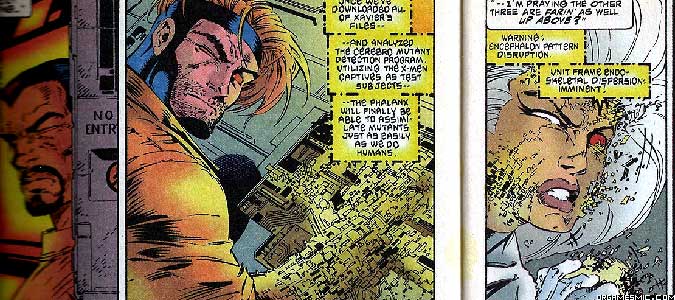
Ever hear of Phalanx? Apparently it is some evil robotic dude that can assimilate humans and was trying to assimilate mutants. I discovered all of this in Uncanny X-Men 316, which was published in the comic book glory period of 1994. (That was sarcasm.)
Readers who follow the larger X Men mythology know that the Phalanx represents a very different kind of enemy. The group does not rely on brute force. It uses assimilation and infiltration to take control of entire populations. The idea feels very influenced by science fiction horror, and Marvel tried to make the threat feel immediate. You can see how the creative team wanted to put the X Men in a situation where their usual tactics would not work. The story also tries to show how vulnerable the team can become when their leadership is scattered.
The Setup of Generation Next
The story is called The Phalanx Covenant: Generation Next Part 1. The simplest way I can explain is that the Banshee discovers that the X-Men have been assimilated by Phalanx while Professor Xavier is elsewhere. Cyclops and his new bride are on their honeymoon, so they escaped unscathed. Banshee needed to let loose Sabretooth and Emma Frost to help control the madness.
This setup creates a very unusual team dynamic. You get a veteran hero, a dangerous wildcard and a morally complicated telepath all forced to work together. The tension gives the issue a very energetic pace. The plot does not slow down because the characters do not have time to argue. They need to move, react and take action before the Phalanx spreads further. The story also tries to make the reader feel the pressure of a crisis that grows every minute. You can see how the writers wanted to push Banshee into a leadership role that he rarely gets.
Joe Madureira and the Visual Identity of the Issue

Uncanny X-Men 316 was illustrated by Joe Madureira, who I can only describe clearly by saying that he has a style of his own. I say this because I think his figures look weird and strangely out of proportion. Yet he continues to elicit a fan base which I do not understand. The one thing I can say though is that his style is unique, and drawing too realistically can it hard for an artist to stand out.
Madureira helped define the visual tone of mid nineties X Men comics. His work blends anime influences with exaggerated anatomy, and the result creates a very energetic page layout. You may not like the proportions, but you can see why the style caught on. The art tries to make every panel feel like it could leap off the page. Many readers respond to that kind of intensity. The nineties market rewarded artists who could put a very bold stamp on a book, and Madureira did exactly that.
The Roger Cruz Controversy
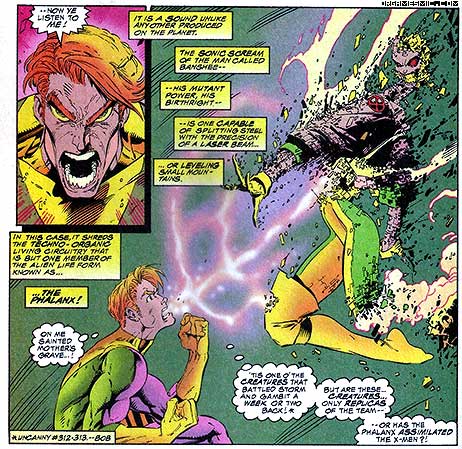
Another interesting thing about this issue is that on page 22, it contains an infamous image taken (swiped) by Roger Cruz. Cruz was accused of repeatedly copying artwork from Joe Madureira. Personally I would have borrowed my artwork from a different artist, but to each their own I guess.
The Cruz situation became a talking point among fans who followed the industry closely. You can see how the debate raised questions about artistic influence, imitation and originality. The nineties created a very competitive environment for artists who wanted to get noticed. Some creators tried to take shortcuts. The controversy did not stop the book from selling, but it did make readers pay closer attention to how artists develop their style. The moment also shows how the X Men line often sat at the center of larger industry conversations.
Legacy of the Phalanx Covenant
There was apparently a lot of interest in this story line. For one, the second X-Men Sega Genesis game seems to be based on this plot. Also, the plot was retold in the X-Men Animated Series on the FOX network. If you are a fan of the series, you do not have a choice but to check the story out (affiliate link) for yourself. There is also a pretty sweet hardcover graphic novel version out there, if you are into that sort of thing.
The Phalanx Covenant continues to show up in discussions about major X Men events. The storyline helped introduce Generation X, which became a very popular spinoff. The animated adaptation brought the concept to a wider audience. The video game version let players take control of the conflict directly. You can see how Marvel tried to make the Phalanx feel like a major threat across multiple formats. The story may feel very nineties, but it still influences how writers handle techno organic enemies in modern comics.