

This page may contain one or more affiliate links, which means that if you purchase a product through that link, I may receive compensation. The links will be identified with the text "affiliate link". Click to learn more.
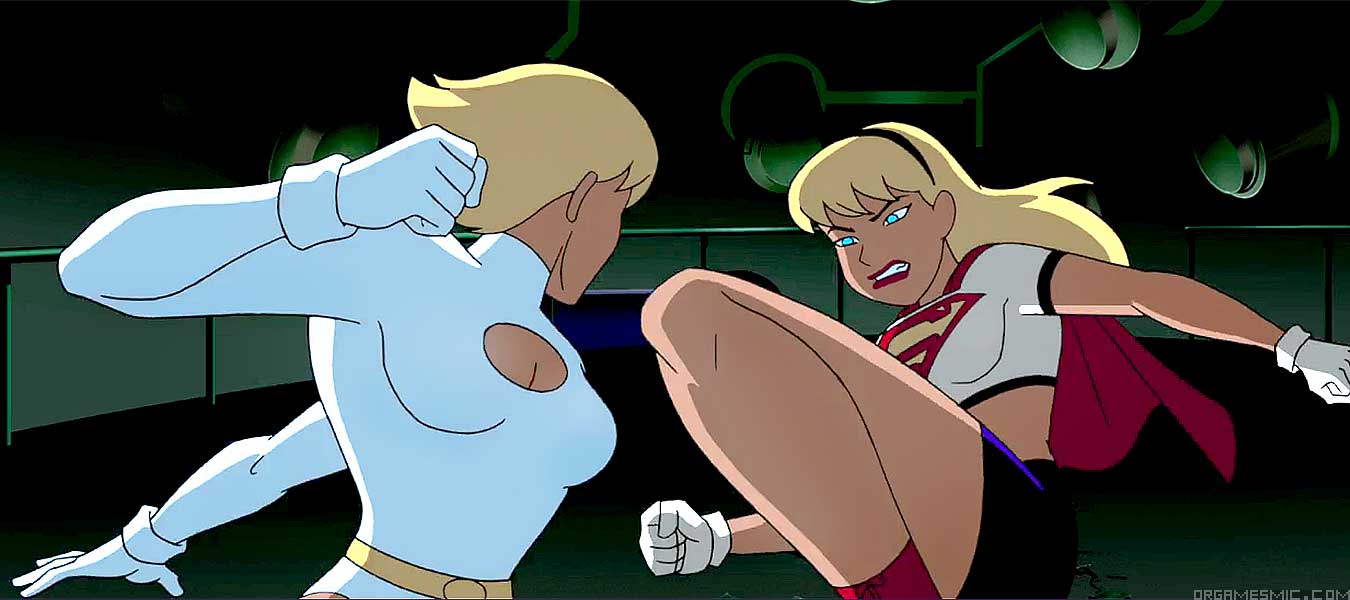
Although many DC Comics fans are aware of Supergirl, fewer know about the Earth-2 variant Power Girl. In the animated series Justice League Unlimited, we get a taste of what would happen if the two of them were to fight. Even though this Power Girl is named Galatea and a clone of Supergirl, and Supergirl isn’t from Krypton, we still get to see the battle of two super-powered females beating each other. Also, we see Power Girl vs Supergirl in a fair-fight scenario to see who would honestly win. And honestly, what more could a superhero fan ask for?
The DC animated universe has graced us with fights of all kinds. Superman battling Wonder Woman, for example. The nature of the medium demands that, even if based on a simple comic book story, it must be extended with fighting.
The Difference Between the Characters
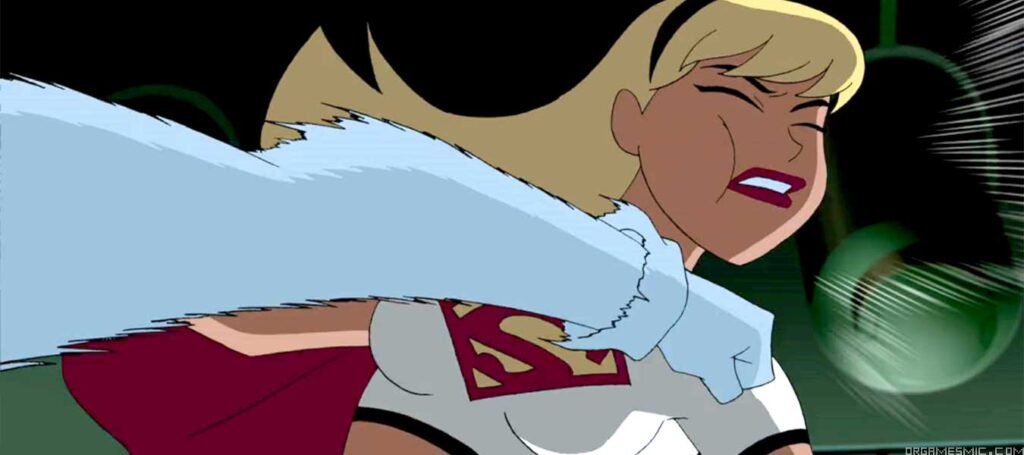
Some might wonder, are Supergirl and Power Girl the same character? Sort of.
In comic books, the original explanation of Power Girl was that she was simply a variation of Supergirl from Earth-2, a parallel dimension. Her chest was more pronounced, but she was still the cousin of Superman. In Justice League Unlimited, her name is Galatea, and she is simply a clone of Supergirl with her body artificially aged “to its physical prime”.
So why am I calling Galatea “Power Girl”? Because she is dressed almost exactly like her (including the famous “boob window” on the costume), and she is still derived from Supergirl. So yeah, basically the same character.
There is also a different variation of Supergirl on this show, instead of the typical Kara Zor-El that is Superman’s direct cousin. Rather, this is Kara In-Ze, from a “sister” planet of Krypton called Argos. (Yeah, I’m confused also.) Also, this Supergirl is dressed exactly like Linda Danvers from the comics.
The reasoning for the differences? The most likely reason is that the producers were not allowed to use certain characters due to licensing restrictions. This led to having to use workarounds and alternatives. Either that or the producers made use of a whiteboard with sticky notes, darts, and maybe a Mason jar full of moonshine to get overly creative.
The Fight Scenes
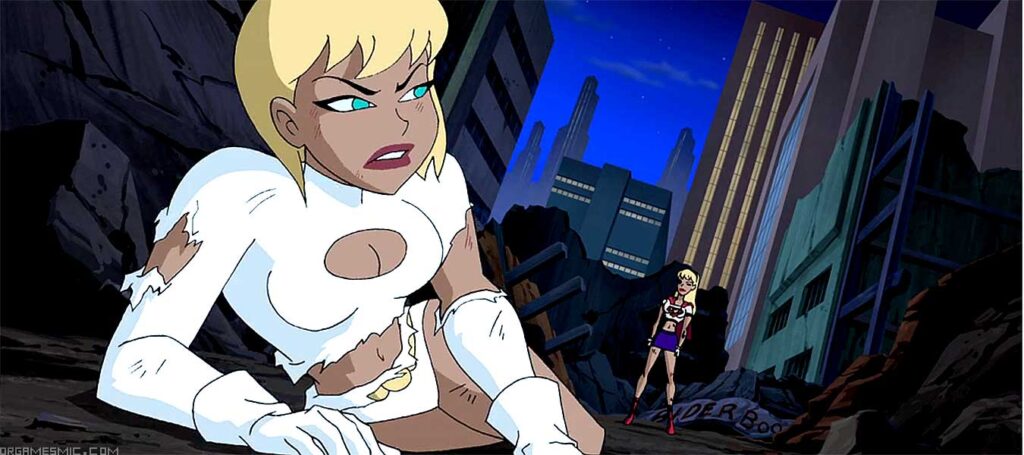
The television series graces us with more than one battle between the female characters. Power Girl vs Supergirl is always entertaining in this show due to Power Girl’s inflated ego. She has had specialized fight training exercises in Metropolis, and the age of her body had been accelerated to adulthood. (Or as Green Arrow put it, she is “umm, a little more… mature”.)
In season 1 episode 6, Supergirl is having dreams of events linked mentally to her unknown clone. Later in the episode, Supergirl is coerced into fighting Power Girl in a fight simulator training room. Due to the psychic link leaking confidential information, Supergirl has to “die”. An entertaining battle ensues with cars thrown and poles swung. To show her strength, Power Girl literally lifts a building and throws it. (Reminds me of when Spider-Man held up a building.) Both of their outfits get torn as the fighting continues, but Power Girl receives most of the damage. An unexpected explosion in the building they are in abruptly ends the fight. While Power Girl is receiving medical treatment for being injured, we find out her name is actually Galatea.
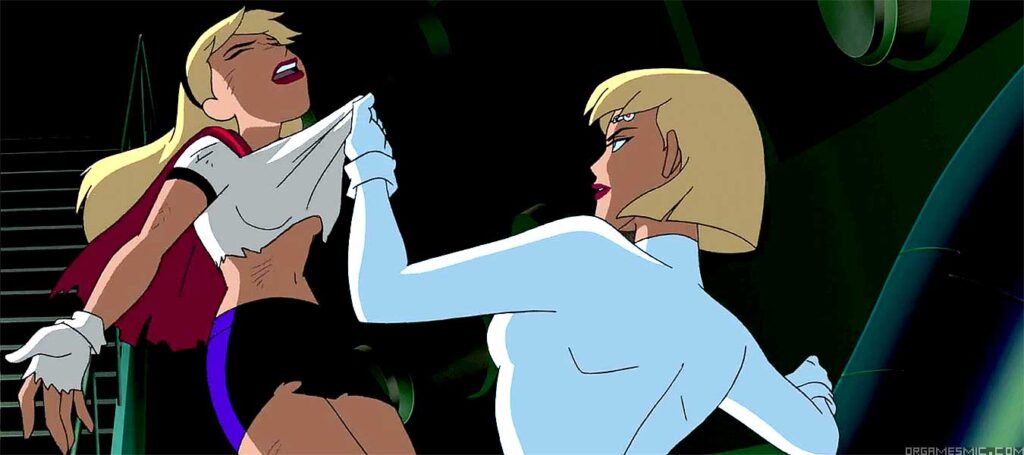
It isn’t until Season 2, Episode 11 that we get to see the most intense fistfight. Power Girl (or Galatea, if you want to be technical) is at the Justice League Watchtower. She reveals her plan to Supergirl to overload the reactor and blow The Watchtower to bits. Things get more interesting when she says she is hoping that Supergirl is “dumb enough” to try and stop her.
Most of the battle is no contest. Power Girl just plummets Supergirl nonstop with her fists and throws her into things. The scene is also suggestive that she didn’t even care about the mission; she just wanted to beat Supergirl out of bitterness. In fact, Power Girl even ignores orders to abort the mission because she is having too much fun defeating her opponent. Although Supergirl eventually defeats her with a shock from a big electrical wire, it’s safe to say that Power Girl is much more powerful in various ways.
Characters and Animation
I don’t know who did the character designs in this show, but all the women are not only super-powered but also super sexy. This is especially true in season 2 of Justice League Unlimited. We get to see Black Canary, Huntress, and Hawkgirl all looking luscious by a very talented team of animators. These season 2 episodes were made back in 2005, fellas. We are talking about old-fashioned hand-drawn animation with digital coloring. Although some apparent computer-generated spaceships and such are in the show, the majority were made with just sweaty palms and hard labor.
Let’s talk about costume damage. When Supergirl’s outfit gets shredded, it’s the show saying, “Okay, now she’s in trouble.” It’s the same storytelling trick anime uses. Battle damage equals escalation. Same with Superman when Doomsday was beating the tar out of him in this show, causing any garments that were on his upper half to disappear. The DCAU doesn’t overdo it, which makes it way more satisfying when it happens. It’s like the animators are giving you a visual progress bar for how badly things are going. (Plus we get to see a little more skin on our superhero crushes.)
Legacy
Justice League Unlimited was the last show to be part of the DC Animated Universe (DCAU). What is crazy is that it started from Batman: The Animated Series in 1992. Fourteen years of animated creativity from the bottom-up ushered in a new age of superhero animation. The vast amount of DC characters created interest for a new generation of watchers.
And keep in mind, these folks were working under network restrictions, budget limits, and probably a deadline that looked like it was written by someone who hates sleep. Yet they still delivered clean fight choreography, expressive faces, and scenes that people still talk about decades later. The Power Girl vs Supergirl fights are a perfect example: they’re fast, they’re brutal, and they’re staged like the animators were trying to win an award for “Best Punching.”
Also, credit where it’s due: the DCAU actually treated its female characters like real characters. Yes, they’re drawn sexy (we all have eyes), but they’re also powerful, competent, and central to the story. Supergirl isn’t just Superman’s sidekick; she has her own arcs, her own trauma, and her own victories. Power Girl (Galatea) isn’t just a villain; she’s basically a walking science experiment with anger issues. The animation gives them personality through movement, expression, and staging.